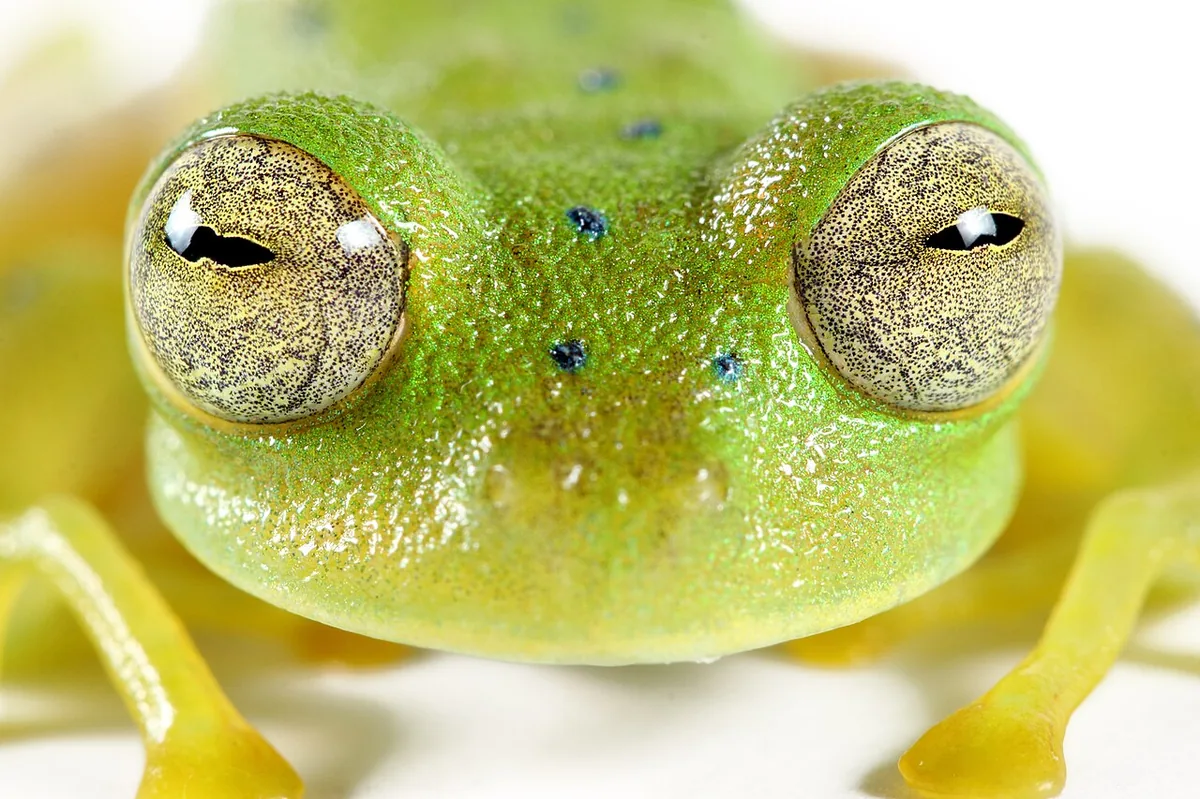
Photo: Santiago Ron from Quito, Ecuador Santiago R. Ron-FaunaWebEcuador (CC BY 2.0) via Wikimedia Commons
The cloud forest at night is a different forest. The birds clock out and the noisy shift clocks in: frogs calling from every puddle, insects clicking and whining, and — if the night is right — a kinkajou crashing through the canopy like a drunk cat. Night walks are one of Mindo's best activities and the one most day trippers skip, which is exactly why staying the night matters.
Facts
| Duration | under 2 hours, easy pace — great for beginners and short stays |
| Price | varies by operator and venue — check current |
| Start | after dark, roughly 6:30–7:30 PM depending on season |
| Bring | rain jacket, closed shoes, flashlight or headlamp (guides carry lights) |
| Works best | rainy evenings, every month of the year |
What you will actually see
Depends on the night, but the regulars are:
- Frogs and glassfrogs. The stars. Glassfrogs are small tree frogs with skin so transparent you can see the organs working. Guides find them on leaves over streams; the good ones are thumbnail-sized and unforgettable.
- Kinkajous. A nocturnal mammal related to raccoons, all tail and appetite, that works the flowering trees. Sightings are lucky rather than guaranteed — but Mindo's forest edge is good kinkajou habitat and night after night adds up.
- Insects worth looking at. Stick insects the length of your forearm, katydids in leaf disguise, glow-in-the-dark fungi and larvae on wet nights, spiders of considerable opinion.
- Sleeping birds. Tanagers and flycatchers on low exposed perches where daylight would never catch them. Photographers love this; the birds tolerate a brief red light.
- Snakes, occasionally. From a distance, with a guide who tells you which ones to respect. This is a normal part of a healthy forest, not a reason to skip the walk.
The formats
- A forest night walk with a guide — trails near town or at reserves, slower and quieter, the better bet for glassfrogs and kinkajous.
- From your lodge. At Las Terrazas de Dana the grounds are themselves a night walk; the garden lights attract moths, and the moths attract everything that eats moths. Ask at the desk which night has been active.
Why rain is good news
Night walks run in every month, and drizzle improves them — frogs call most when it is wet, and wet nights bring out the glow fungi. The tour is short (under 2 hours) precisely so a rainy evening stays fun rather than an ordeal. Bring the rain jacket anyway; the forest will settle the argument.
Practical tips
- Wear closed shoes. Sandals are for the pool.
- Use red light where possible — most guides switch lights to red, kinder to animals and to your night vision.
- Leave the drone and the speaker at home. The dark is the animals' living room.
- Kids: from about age 6 up, this is a highlight. Younger children often fall asleep in the backpack carrier, which is also fine.
After the walk
Night walks end by 8:30–9 PM, which in Mindo is late. The cock-of-the-rock lek is at dawn, so dinner, bed, and the frogs singing you to sleep is the honest ideal schedule.
Start here
Facts checked: September 2026
The Hermit Night Walk: the glassfrog special
Among the night-walk options in Mindo, the Hermit Night Walk ($15 per person) is the one we recommend when glassfrogs are the goal. It runs on private forest trails where the streams are exactly the habitat glassfrogs need, and the guides know which leaves to check. You will see them — and once your eyes adjust, you will wonder why every frog isn't this easy to find. Kinkajous, owls and other nocturnal show up too, but the glassfrogs are the reason to book it.