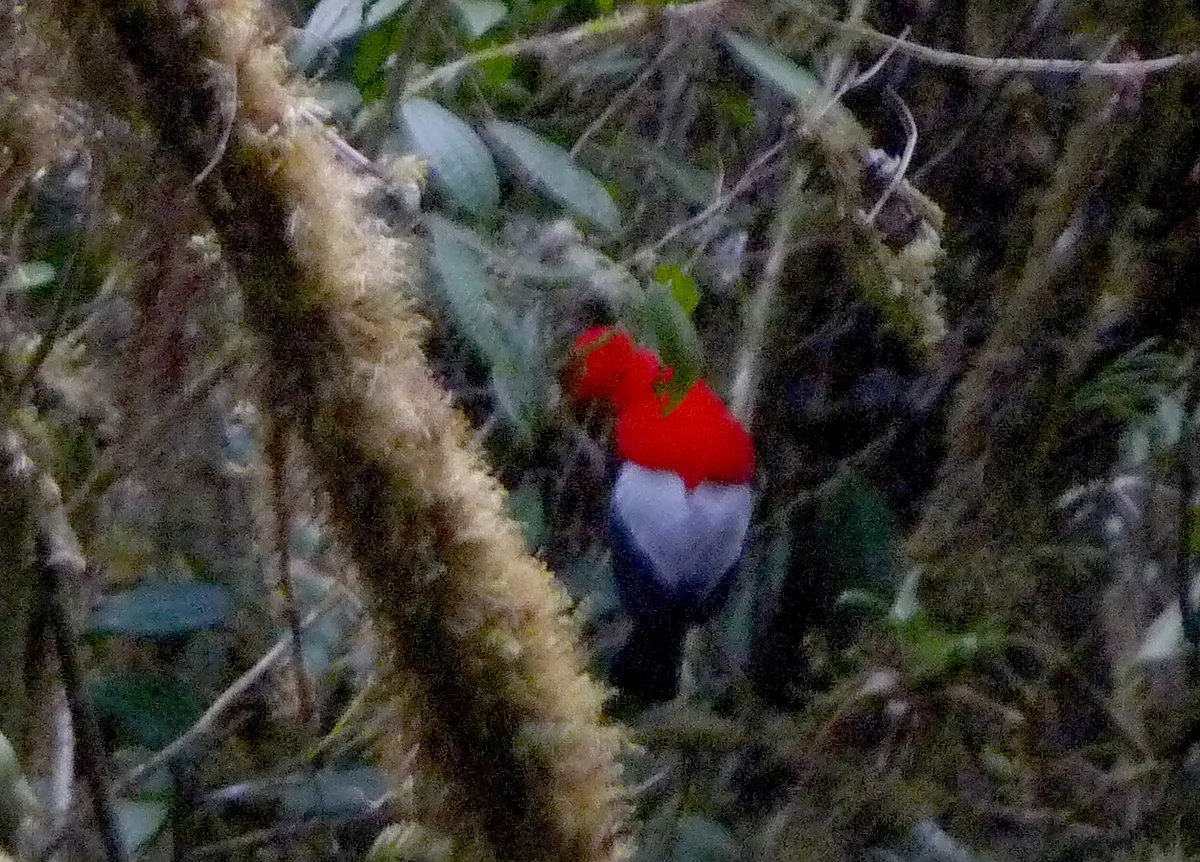
Photo: gailhampshire from Cradley, Malvern, U.K (CC BY 2.0) via Wikimedia Commons
Most visitors arrive asking about birds and leave talking about everything else. Mindo's wildlife is unusually visible for a forest this rich: leks you can sit at, feeders that pull in dozens of hummingbirds, a butterfly house where the animals land on you. This page maps the whole cast and tells you where each act happens.
The headline numbers
Mindo sits in the Chocó Andino biodiversity hotspot. The wider area holds more than 450 bird species, and the Mindo Christmas Bird Count has topped 400 species in a single day — one reason it has ranked among the world's best counts several years. The mariposario near town keeps 25+ butterfly species flying. Those are the bankable numbers; almost everything else on this page you judge with your eyes, not a checklist.
Birds (the obvious stars)
- Andean cock-of-the-rock. Scarlet, ridiculous, and reliable at dawn leks. Males gather before sunrise and scream at each other. See our cock-of-the-rock lek page.
- Antpittas. Shy ground birds that Paz de las Aves famously feeds worms to by hand — six species come in. See antpittas at Paz de las Aves.
- Hummingbirds. 30+ species possible in a day across altitude bands; the feeders near town alone produce 10-15. See hummingbirds of Mindo.
- Toucans. The plate-billed mountain toucan is the Chocó poster bird. See toucans of Mindo.
- Tanagers, barbets, quetzals, trogons — the colorful midstory crowd a good guide finds on any forest morning.
Butterflies
The Mariposas de Mindo butterfly house, about 1.6 km from town, flies 25+ native species in a walk-in flight cage and runs a guided lifecycle tour included with entry. Adults $8.50, children $4 — check current prices. Beyond the mariposario, wild butterflies are constant on sunny trail sections: morphos flashing blue through the understory, longwings drifting in groups. See butterflies of Mindo.
Frogs and reptiles
The cloud forest is amphibian country: constant moisture, streams everywhere, leaf litter that never dries. Glassfrogs — small green frogs with skin so transparent you can see their organs and bones — are the local celebrities; on night walks, guides find them on leaves over streams and their eyes shine back like sequins. We have a full page on glassfrogs in Mindo. You will also meet stream frogs, tree frogs, lizards basking on trail edges, and — rarely, at higher reserves — snakes that want nothing to do with you. Do not handle anything; night walks go with a guide for a reason.
Mammals
Being honest, because most pages are not: medium and large mammals exist here but are rarely seen.
- Spectacled bear. The Andes' only bear lives in these mountains and occasionally appears at higher elevations near Mindo. Real sightings are a lucky event, not an itinerary item. See the spectacled bear in Mindo.
- Coatis, agoutis, armadillos. Present in the reserves; coatis sometimes cross trails in family groups.
- Bats. The night shift's main event — nectar bats work the banana feeders and flowers after dark.
- Kinkajous and olingos. Nocturnal tree mammals; a guide with a spotlight on a night walk occasionally finds one.
We will not quote population figures for any of these. Numbers floating around online are not verifiable; ask a reserve what they have camera-trapped lately and you will get a straighter answer.
Where to look, by time of day
| Time | Where | What |
|---|---|---|
| Dawn (5:45-8:00) | Cock-of-the-rock lek, Paz de las Aves | lek displays, antpittas |
| Morning (8:00-12:00) | Forest trails, reserves | tanagers, toucans, mixed flocks |
| Midday | Mariposario, hummingbird gardens | butterflies, hummingbirds |
| Night (after dinner) | Trails near streams | glassfrogs, kinkajous, insects |
Practical notes
- Rainy-season showers (late October to April) push wildlife into shorter active windows; mornings matter even more then.
- A certified guide changes the ratio completely. Mindo has around 60 of them; birding-specific rates are on our birdwatching guide.
- Good binoculars matter more for mammals than birds here — most of what you will see is far and briefly.
Keep reading
- Cloud forest explained — why this forest holds so much life
- Birdwatching in Mindo — the complete birding guide
- Night walks in Mindo — the amphibian shift
- Best time to visit Mindo — month by month
Facts checked: September 2026