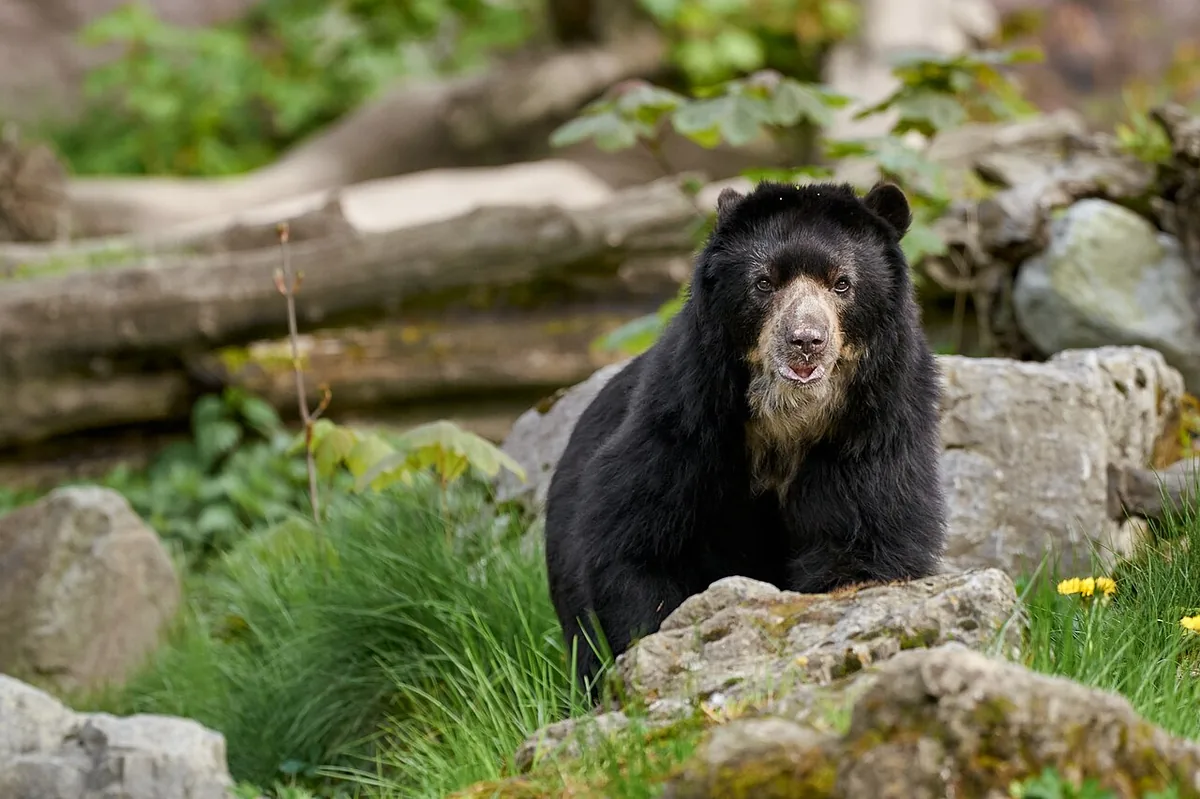
Photo: Anil Öztas (FAL) via Wikimedia Commons
Let's start with the honest part: you are probably not going to see a spectacled bear in Mindo. They live in these mountains, they pass through reserves around the valley, and every year somebody gets a camera-trap photo that makes the local guides' week. But a bear sighting is a lottery ticket, not an itinerary item. This page is about the animal itself, why the cloud forest around Mindo matters to it, and where your odds are least bad — because the species is worth knowing even if it never shows itself.
The only bear in South America
The spectacled bear — Andean bear, oso de anteojos — is the only bear species on the continent, and one of the world's most threatened. The name comes from the pale markings around the eyes and across the muzzle, which form a pattern unique to each individual, like a fingerprint. Scientists identify individuals from those markings in camera-trap photos.
They are mid-sized bears, mostly vegetarian, and they climb superbly. In cloud forest they spend much of their time up in the trees building platforms of bent branches — feeding platforms that stay visible long after the bear has moved on. Guides sometimes find fresh ones on high-elevation trails, which is as close as most visitors get.
Where they live around Mindo
Spectacled bears range across the Andes from Venezuela to Bolivia, and the western slope cloud forests of Pichincha province — the Chocó Andino around Mindo — hold known bear territory, especially the higher, less-visited ridges and the corridors of protected forest connecting reserves. They need enormous ranges, intact forest, and quiet; Mindo's tourist core is not bear habitat, but the upper watershed above it is.
What they eat here: bromeliads and orchid bulbs are staples, plus fruit from native trees when in season, and occasionally they raid maize fields at the forest edge — which is where bears and humans meet, and where most conflict happens.
Your realistic odds
We will not quote a population figure for bears around Mindo. Published numbers do not exist at the resolution people want, and inventing one would be worse than admitting the truth, which is: no reliable count, presence confirmed, density unknown.
What experience says:
| Where | Your odds |
|---|---|
| Mindo town, trails, waterfalls | Essentially zero |
| Mid-elevation reserves (Paz de las Aves, etc.) | Very low; signs possible, sightings rare |
| High remote reserves, multi-day treks | Low but real; camera traps do the confirming |
If seeing a bear matters more to you than anything else in Ecuador, adjust your plan — this is not the destination for guaranteed bears. What Mindo guarantees is the forest the bears need.
Why bears matter to the forest
Spectacled bears are seed dispersers at landscape scale: they eat fruit across huge territories and deposit seeds far from the parent trees. Protecting bears effectively means protecting corridors of connected forest, which protects everything else in this guide — the 450+ bird species, the glassfrogs, the whole system. That is why conservationists use the bear as an umbrella species for the Chocó Andino.
If you want to try anyway
- Go higher and longer: multi-day treks into the reserves above the valley, arranged with local operators.
- Hire guides who work those upper trails; they know the feeding platforms and recent sign.
- Bring proper optics — most bear encounters at these elevations are distant shapes in a clearing at dusk.
- Manage expectations, tell yourself it's about the forest, and then be genuinely shocked if you get lucky.
Keep reading
- Mindo wildlife guide — the animals you will actually see
- Cloud forest explained — the ecosystem bears depend on
- Mindo Nambillo reserve — protected forest close to town
- Responsible tourism in Mindo — how your visit funds protection
Facts checked: September 2026